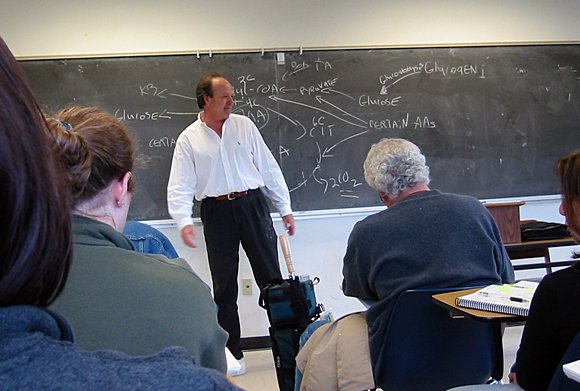
Dr. Ray, The Professor
Dr. Ray taught one of the most comprehensive, challenging, and beloved science courses at the University, conducted biochemical medical research in the area of intermediary metabolism in the Department of Molecular Biosciences, School of Veterinary Medicine, University of California at Davis under Department Chair Professor Dr. Richard Freedland with lineage to Nobel laureate Sir Hans Krebs, recipient of the Nobel Prize in Physiology/Medicine for his discovery of the Citric Acid Cycle. Dr. Ray shaped generations of students who came to love and appreciate the beautiful complexity and interrelationships between human biochemistry, nutrition, and cellular physiology.
There is a version of teaching that transmits information. And there is another kind — rarer, more powerful — that changes how a person sees the world. Dr. Ray practiced the second kind.
His flagship course, Biological Sciences 170: Advanced Nutrition & Metabolism, was not for the faint of heart. Students had to earn their way in — prerequisites included biochemistry, a strong background in upper division science courses, and consent of Dr. Ray. Once admitted into the class, the student encounters a graduate-level study of the biochemistry and physiology of human nutrition: extensive study of carbohydrate, lipid, amino acid/protein, vitamin, mineral, water, alcohol, neurotransmitter, nucleotide, and hormone metabolism. A sample of what students will also critically examine are the interrelationships between the Krebs cycle (tricarboxylic acid cycle) and oxidative phosphorylation (electron transport system), which defines the control of cellular respiration and ultimately the rate of substrate utilization for cellular energy (ATP) production. The full elegant machinery of life.
“Students described it as the hardest and most comprehensive university class they ever loved.”
Dr. Ray was recognized with a Meritorious Superior Teaching Award by the University for his 28 years of teaching at the University. Dr. Ray was also selected as one of only five national faculty panelists at UC Berkeley's Annual Faculty Teaching Symposium. He also presented over 300 hours of live televised instruction and won the Cable Television Educator Award three consecutive years.
A Scholarly Foundation
Ph.D. in Nutrition Science with an emphasis in Physiological Chemistry, Dept. of Molecular Biosciences, School of Veterinary Medicine, University of California, Davis.
Biological research related to alcohol and liver metabolism within the Department of Molecular Biosciences, in the laboratory of Dr. Richard A. Freedland, Department Chair of Molecular Biosciences, UC Davis School of Veterinary Medicine, University of California, Davis. Scientific lineage to Nobel laureate Sir Hans Krebs, recipient of the Nobel Prize in Physiology/Medicine for his discovery of the Citric Acid Cycle.
California State University, Sacramento
Department of Biological Sciences
Biological Sciences 170: Advanced Nutrition & Metabolism
Los Rios Community College District
Continuing Education Provider
California Board of Registered Nursing
Cable Television Experience
Presented over 300 hours of live televised instruction on current nutrition and health topics on public cable television. SECC Cable Television Educator Award for three consecutive years.
Public Radio and Television Experience
Radio and television guest commentator on current health-related topics.
Spokesperson
Representative at Special Award Events for the Governor's Council on Physical Fitness and Sports.
Biological Research
Biological research related to alcohol and liver metabolism within the Department of Molecular Biosciences, UC Davis School of Veterinary Medicine, University of California, Davis.
Court Appointed Expert Witness
Serve as expert witness in alcohol and drug related litigation.
Scholarship Judge
Serve as a panelist judge awarding scholarships to pharmacy students.
Continuing Education Provider
Licensed Continuing Education Provider: Formally Licensed with the Board of Registered Nursing, State of California. Seminars and workshops reflect the growing need to in-service health care professionals on health and wellness, life-style, and drug abuse issues. In-servicing provides up to 24 hours of continuing education credits for registered nurses on various health topics. Additional continuing education provided to alcohol counselors and attorneys licensed in California.
Textbook Editor
Editor, “Advanced Nutrition and Human Metabolism,” First Edition, West Educational Publishing Company, Saint Paul, Minnesota.
- Governor's Council on Physical Fitness and Sports / Greater Sacramento Council on Physical Fitness and Sports (Board of Directors)
- Faculty, California State University, Sacramento
- Faculty, Los Rios Community College District
- Continuing Education Provider, California Board of Registered Nursing
- Screen Actors Guild (Taft Hartley)
- American Federation of Radio and Television Artists (Taft Hartley)
- Licensed California Real Estate Broker
- PADI Certified: Advanced Open Water Specialty Diver (Enriched Nitrox Diver)
- FAA-Certificated Remote Pilot, Small Unmanned Aircraft Systems / sUAS, 14 CFR Part 107
Honors and Awards
- Endorsement of book “The Smallest Things Make the Biggest Difference” by three #1 National Bestselling Authors.
- Endorsement of book “The Smallest Things Make the Biggest Difference — SMART WEIGHT LOSS” by the president of the American College of Sports Medicine. For more than fifty years the American College of Sports Medicine has been the largest and most respected sports medicine and exercise organization in the world.
- Endorsement of book “Shattering Myths and Mysteries of Alcohol” by the Editor-in-Chief (George D. Lundberg, M.D.) of the Journal of the American Medical Association (JAMA), American Medical Association.
- To have had the opportunity, freedom, and privilege to pursue academic interests (Ph.D. dissertation) in biological research involving alcohol metabolism within the laboratory of Dr. Richard A. Freedland, Department Chair of Physiological Sciences (Molecular Biosciences), School of Veterinary Medicine, University of California, Davis.
- Recipient of the California State University “Meritorious Performance and Professional Promise Award” for superior teaching at the university.
- Selected as one of five national faculty panelists at UC Berkeley's Annual Faculty Teaching Symposium to share expertise on effective communication and teaching skills.
- Selected as a faculty member to speak at the Young Presidents' Organization's “New York City University” 50th Anniversary.
University of California at Davis — The Lab That Shaped Everything
Dr. Ray's doctoral scientific research was conducted at the University of California at Davis in the laboratory of Dr. Richard A. Freedland, Chair of Molecular Sciences, School of Veterinary Medicine, UC Davis (No. 1 rated school of veterinary medicine in the world). Dr. Ray's lab colleague Dr. Roger Newton went on to develop Lipitor, one of the most prescribed cholesterol-lowering drugs in history. Dr. Newton also developed Nexletol and Nexlizet, used to lower blood cholesterol levels. Dr. Haring's and Dr. Newton's laboratory research methods were developed in Dr. Krebs' laboratory at the University of Oxford, England and brought back by Dr. Freedland — who personally worked with Dr. Krebs in his laboratory — so that his Ph.D. candidates could use the same laboratory techniques in their research.
Alcohol Metabolism
Dr. Ray's dissertation research focused on the biochemical and physiological mechanisms controlling ethanol (alcohol) oxidation. This work formed the scientific backbone of Shattering Myths & Mysteries of Alcohol — endorsed by Dr. George D. Lundberg, M.D., Editor-in-Chief of the Journal of the American Medical Association (JAMA), American Medical Association.
Biological Sciences 170: Advanced Nutrition & Metabolism
Designed, developed, and exclusively taught by Dr. Ray.
Course Syllabus
California State University, Sacramento · Spring Semester
Recommended Material: Advanced Nutrition and Human Metabolism. Third Edition, West Publishing.
Comprehensive study of nutrition from a biochemical and physiological approach. Examination of essential nutrients and their interrelationship with cellular metabolism. Designed for students interested in nutrition and cellular metabolism.
- Detailed understanding of intermediary metabolism.
- Identify and critically examine metabolic events involved in maintaining life. Four basic questions will be addressed: (a) Why does the metabolic pathway exist?; (b) In what tissues do the metabolic pathways occur?; (c) What are the metabolic steps of the pathway?; and, (d) What controls/regulates metabolic events occurring in cells?
- Examine the organization and metabolic function of specialized body cells.
- Examine how hormones and enzymes are involved in the regulation of metabolic processes.
- Appreciate how complex chemical compounds and nutrients interrelate and participate in metabolic pathways.
- Examine the biosynthesis and degradation of nutrients and biological compounds.
- Examine common research methods used to study nutrition and metabolism.
- Understand the metabolic basis for various clinical disorders.
- Comprehensive examination of the characteristics and physiological functions of specific nutrients (carbohydrates, lipids, proteins, vitamins, minerals, and water) in relation to the metabolic roles they play in the body.
- Examination of the interactions and relationships that exist between nutrients.
- Basic understanding of diet in relation to nutritional and energy requirements.
- Apply knowledge and understanding of nutrients to contemporary and controversial subjects.
- Understand the importance of an adequate diet in maintaining homeostasis and the general health of an animal.
To provide a comprehensive account of the interrelationships between nutrition and metabolism. The major emphasis throughout the course will be on understanding nutritional, physiological, and biochemical processes responsible for promoting and maintaining homeostasis and life.
Lecture (90-95 % of class), discussions (as much as possible), and exams.
Develop a clear and concise understanding of all lecture material, reading assignments, and independent class assignments. Each student is required to be able to analyze and integrate nutritional concepts discussed in class and in reading assignments. Each student is required to use and apply the knowledge he or she gains from lecture and reading material to critically examine and contemplate current nutrition and health issues.
Textbook reading assignments are used to supplement lecture information.
Participation in a GROUP PROJECT is required. Student groups will be assigned one vitamin and one mineral to discuss in class during the scheduled vitamin and mineral discussion section. Groups will consist of two students. Each student within each group is expected to do their own reading, research, and analysis. Each student must submit a 3-4-page outline for each nutrient (six to eight pages total for each student).
Analysis and write-up will consist of a critical evaluation of each nutrient in terms of their major physiological functions and detailed metabolic roles. Emphasis on each nutrient will be on examining the metabolic significance each nutrient plays in human nutrition. Please include six true and false questions obtained from your analysis. As a group, students are expected to work together to present a 15-minute class presentation on the two assigned nutrients. Group project are graded on a pass or fail basis. Failure to participate in the GROUP PROJECT will result in an automatic deduction of 15 percent of the total possible class points.
Deadline for submitting individual reports will be announced the first week of class. Sign-up for scheduled class presentations will begin one week after the beginning of class.
- What is nutrition all about? What is intermediary metabolism all about? What is this course all about?
- Appreciating life and the inherent beauty of biological systems.
- Thinking about the complexity of our body in terms of cell organization, i.e. plasma membranes, nucleus, mitochondria, endoplasmic reticulum, golgi complex, lysosomes, peroxisomes, and the cytoplasm.
- Thinking about different kinds of specialized cells, i.e. liver, kidney, brain, muscle, adipose, lung, erythrocytes, leukocytes, bone, thyroid, parathyroid, pancreatic, cardiac, gastrointestinal, nerve, endocrine, reproductive, and tumor cells.
- Thinking about the complexity of our body in terms of biomolecules, i.e. chemical compounds that are involved in nutrition and metabolism.
- General biological concepts that relate to the field of nutrition.
- The significance of maintaining homeostasis.
- Chemical reactions necessary to maintain life.
- Food and essential nutrients.
- Carbohydrates: Definition, nomenclature, chemical composition and structure of common carbohydrates, synthesis, digestion, absorption, transport, introduction to metabolism, functions, food sources, health & disease ideas, dietary requirements and recommendations.
- Lipids: Definition, nomenclature, chemical composition and structure of lipids and related compounds, physical properties, digestion, absorption, transport, introduction to metabolism, functions, food sources, health & disease ideas, dietary requirements and recommendations.
- Proteins: Definition, chemical structure of amino acids and selected proteins, essential and nonessential amino acids, introduction to protein synthesis, digestion, absorption, transport, introduction to metabolism, nitrogen balance studies, protein quality, functions, health & disease ideas, food sources, requirements and recommendations.
- Vitamins: Classification, chemical structures and properties, physiological functions, deficiency and toxicity symptoms, food sources, tissue storage, and dietary recommendations.
- Minerals: Classification, physiological functions, deficiency and toxicity symptoms, food sources, health and disease ideas, and dietary recommendations.
- Water: Body fluid compartments; composition of body fluids; regulation of fluid contents; pH, pK, and buffers; acid base regulation (general biochemical and physiological aspects of regulation); forces producing movement of substrates between compartments (diffusion, carrier-mediated transport, filtration, osmosis, and active transport); sources; functions; homeostasis; and recommendations.
- Acid-base chemistry.
- Review of acid-base balance.
- Hydrogen ion production in the body.
- Regulation of pH: Buffers, respiratory control and renal regulation.
- Clinical example: Diabetes and ketoacidosis.
- Energy concepts and weight control.
- Calories and high-energy rich compounds, direct and indirect calorimetry, heat of combustion and physiological fuel values, proximate analysis of food, variation in caloric content of food, and counting calories.
- Energy expenditures: Basal metabolism, physiological activities, dietary thermogenesis, and estimating energy expenditures.
- Metabolism and respiratory quotient.
- Appetite and hunger concepts.
- Dieting, exercising, and weight control ideas.
- Improving your diet (quick review of major concepts).
- Dietary standards, RDA, DRV, DV, RDI (USRDA); food labeling, nutrient density concepts; food composition tables; selection of an adequate diet; evaluation of nutritional status; drug and nutrient interactions; health foods; additives; reliable nutrition sources.
- Thinking about how much we eat: Application of material and general class discussion on personal food choices and habits.
- General calculations.
- What are enzymes and cofactors?
- Significance of enzyme turnover.
- Nomenclature and classification of enzymes.
- Mechanism of enzyme action.
- Enzyme properties: specificity, denaturation by temperature and hydrogen ion concentration, and mechanism of inhibition and activation of enzymes.
- Significance of enzyme activity.
- Enzyme kinetics: general properties of enzyme kinetics, significance of hyperbolic (Michaelis-Menten kinetics) and sigmoidal kinetics in enzyme regulation of metabolic pathways.
- Determination of enzyme kinetic constants (Lineweaver-Burk plots).
- Overview of enzymes in nutrition and intermediary metabolism.
- What are hormones?
- What are endocrine glands?
- Difference in biochemical structure of certain hormones.
- Regulation of hormone secretion.
- How hormone receptors work.
- Mechanisms of hormone action.
- Hormones in nutrition and intermediary metabolism.
- Overview of biochemical and physiological effects of hormones.
- Biosynthesis of certain hormones.
- Hormone-related compounds (prostaglandins).
- What are neurotransmitters?
- Introduction to neurotransmitter metabolism.
- Synthesis and catabolism of neurotransmitters.
- Biochemical effects of neurotransmitters.
- Effect of nutrition (diet) on the level of certain neurotransmitters.
- What are nucleotides and nucleic acids?
- Biochemical structures.
- Significance of nucleic acids in the storage and transfer of information in protein synthesis.
- Significance of nucleotides in nutrition and metabolism.
- Introduction to metabolic pathways.
- Laboratory methods used to study metabolism.
- Cellular systems: Isolated cells; tissue slices; isolated organs; whole animal.
- Cell-free systems: Isolated enzymes; cell-free homogenates.
- Biochemical energetics.
- Fundamental laws of energy transformations.
- Exergonic and endergonic reactions in metabolism.
- Energy-rich compounds.
The following questions will be addressed in the discussion of metabolic pathways.
- Why? What are the functions of metabolic pathways?
- Where? In which tissues do the metabolic pathways occur?
- When? How is metabolic flux controlled/regulated?
- Steps! Attention will focus on the sequence of metabolic pathways.
- Cellular location.
- Reactions of the cycle.
- Functions: oxidation of acetyl coenzyme-A; biosynthesis reactions; relationship to gluconeogenesis and lipogenesis.
- Energetics of the cycle.
- Control/regulation of key enzymes in Krebs cycle.
- Anaplerotic reactions.
- Entry of amino acids into the Krebs cycle.
- Integration and overview of Krebs cycle as a metabolic pathway.
- Cellular location.
- Function.
- Major components of the respiratory chain.
- Oxidative phosphorylation.
- Control of respiration.
- Mitochondrial energy states.
- Inhibiting and uncoupling oxidative phosphorylation.
- Integration of Krebs cycle and oxidative phosphorylation.
- Significance of the adenine nucleotide translocase system.
- Application of material to experimental research.
- Significance of metabolic pools: compartmentalization of ions, enzymes, and various metabolites.
- Transport across membranes: passive diffusion, active transport, mediated transport.
- Transport of reducing equivalents: Malate-aspartate shuttle system and the glycerol phosphate shuttle system.
- Adenine nucleotide transport.
- Ion transport across membranes.
- Application of material to experimental research.
- Review of nomenclature and chemical structure of carbohydrates.
- Catabolism of carbohydrates:
- Glycolysis: cellular location, function, metabolic pathway, regulation, physiological significance of anaerobic glycolysis, and clinical aspects.
- Pentose phosphate pathway: cellular location, function, metabolic pathway, regulation, and physiological significance.
- Glycogenolysis: cellular location, function, metabolic pathway, regulation, and physiological significance.
- Application of material to experimental research.
- Anabolism of carbohydrates.
- Glycogenesis: cellular location, function, metabolic pathway, regulation, and physiological significance.
- Gluconeogenesis: cellular location, function, metabolic pathways, regulation, and physiological significance.
- Clinical examples of metabolic aberrations in carbohydrate metabolism.
- Diabetes
- Hypoglycemia
- Galactosemia
- Lactose intolerance
- Metabolism of carbohydrate related compounds.
- Chondroitin sulfates, keratin sulfates, heparin sulfates, and hyaluronate.
- Seeing the whole picture: Quick review of pyruvate metabolism.
- Note on fructose metabolism.
- Review of nomenclature and chemical structure of lipids.
- Catabolism of lipids.
- Lipolysis: cellular location, function, metabolic pathway, regulation, and physiological significance.
- Fatty acid oxidation: cellular location, function, metabolic pathway, regulation, energetics, physiological significance, metabolic consequences, and relevance to ketogenesis and ketoacidosis.
- Ketone body formation and utilization: cellular location, function, metabolic pathway, physiological significance of ketogenesis, tissue utilization of ketone bodies, and regulation of ketogenesis.
- Anabolism of lipids.
- Lipogenesis: cellular location, function, metabolic pathway, regulation, physiological significance.
- Synthesis and metabolism of cholesterol and steroid hormones.
- Lipoprotein metabolism.
- Composition and physiological roles of plasma lipoproteins.
- Clinical significance of lipoprotein metabolism.
- Biosynthesis of nonessential amino acids
- Amino acid synthesis from Krebs cycle intermediates.
- Amino acid synthesis from carbohydrate metabolism.
- Amino acid synthesis from essential amino acids.
- Amino acid synthesis from nonessential amino acids.
- Overview of amino acid metabolism in various tissues: liver, muscle, kidney, intestine and brain.
- Degradation of amino acids
- Fate of nitrogen: utilization and disposal of nitrogen via the urea cycle. Emphasis will be on understanding the urea cycle.
- Fate of carbon: glucogenic and ketogenic pathways.
- Amino acids as precursors of important compounds
- Amine synthesis: catecholamines, serotonin, and histamine.
- Acetylcholine.
- Creatine synthesis.
- Carnitine synthesis.
- Gama-aminobutyrate synthesis.
- Thyroxine synthesis.
- Alcohol and nutrition: nutritional considerations.
- Cellular location and metabolic pathway of ethanol oxidation.
- Energetics of ethanol metabolism.
- Control of ethanol metabolism.
- Nutrition/metabolism and breakfast (metabolic changes after ending a fast).
- Nutrition/metabolism and diseases (diabetes, hypoglycemia, heart disease, etc.).
- Nutrition/metabolism and coffee breaks (metabolic effects of caffeine).
- Nutrition/metabolism and stress (metabolic changes induced by physical and emotional stress).
- Nutrition/metabolism and happy hour (effect of ethanol on liver metabolism).
- Nutrition/metabolism and exercise (nutritional and physiological considerations).
- Nutrition/metabolism and inactivity (atrophy).
- Nutrition/metabolism and overindulgence (obesity).
- Nutrition/metabolism and learning (research).
Three one-hour (closed book) exams worth 22% each. A comprehensive final exam (closed book) worth 34% of total class grade.
Note: Lecture and class hand-outs (lecture supplement) will be covered on all exams.
Class grades based on percent of total points.
| Exam | Weight | Coverage |
|---|---|---|
| Exam 1 | 22% | Topic I (Sections 1–6) |
| Exam 2 | 22% | Topic II (Sections 7–12) |
| Exam 3 | 22% | Topic III (Sections 13–17) |
| Final Exam | 34% | Sections 18–25 and metabolic & physiological functions of vitamins and minerals. Comprehensive — all sections covered. |
All exams must be taken on the day they are scheduled. People who have a legitimate (reasonable) excuse may make up the exam within the week (otherwise 10% deducted). Due to the fact I have to meet a grade deadline date, there will be no possibility to take a late final exam. Notify me at once if you feel a cold developing. No form of cheating is tolerated in BS 170.
Note: Lecture by lecture reading assignments will be announced each class session to help assist students organize their study time and habits. Reading assignments will mirror topics covered week by week. At the beginning or end of each lecture, students will be notified of topic materials to be covered for the following lecture(s).
EXAM # 1 COVERS TOPIC 1 (SECTIONS 1– 6)
EXAM # 2 COVERS TOPIC II (SECTIONS 7–12).
EXAM # 3 COVERS TOPIC III (SECTIONS 13–17).
EXAM #4 (FINAL) COVERS SECTIONS 18–25 AND METABOLIC & PHYSIOLOGICAL FUNCTIONS OF VITAMINS AND MINERALS. REMEMBER THE FINAL EXAM IS COMPREHENSIVE (ALL SECTIONS COVERED ON FINAL).
© Copyright owned by Raymond V. Haring, Ph.D. · www.smallestthings.com
The Beautiful Complexity of Life
The following commentary and metabolic pathway diagrams are presented in Dr. Ray's own words — exactly as he has taught them for decades.
Aside from the few remarks below, no significant effort is made to explain the importance of these metabolic pathways. I hope the few comments provided, however, conjure up some curiosity.
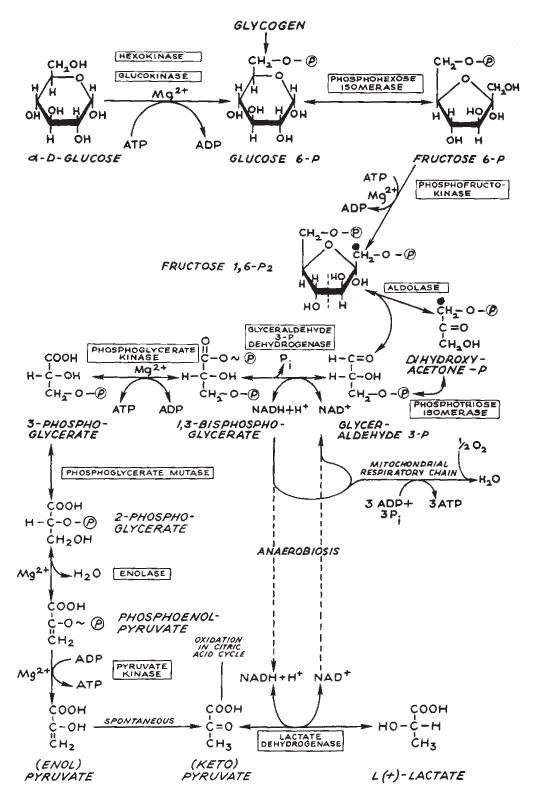
The first pathway, shown below, describes the catabolism of carbohydrate (glucose) to lactate via anerobic glycolysis, which by definition occurs under anaerobic conditions. The next time you exercise and feel that “burn,” you will begin to appreciate this pathway and the reason why heart rate and respiration increase with muscle lactate production. Essentially, your lungs and heart are trying their best to deliver and replenish the additional oxygen used and needed during intense muscular activity. I have a great section on this material in Smart Weight Loss. Reading Smart Weight Loss is a much easier way to understand nutrition and exercise metabolism without pronouncing funny names and staring at strange diagrams. This is one of the reasons I wrote Smart Weight Loss.
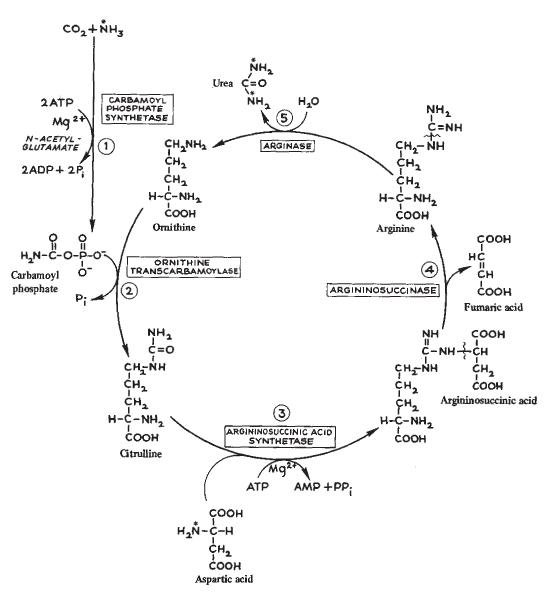
The next metabolic pathway, shown below, is essential for the synthesis of urea (ureagenesis) from various nitrogen sources. Not a pathway we spend too much time thinking about on a daily basis until it is time to appreciate the vital role our kidneys and liver play in the elimination of nitrogen in the form of urea.
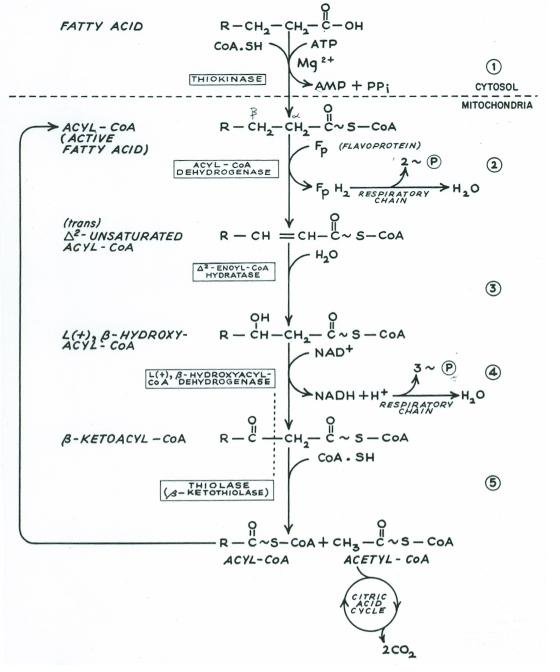
The next metabolic pathway, shown below, describes the oxidation (burning) of fatty acids (fat). The best way to lose extra or unwanted adipose tissue (fat) is to do more of the following:
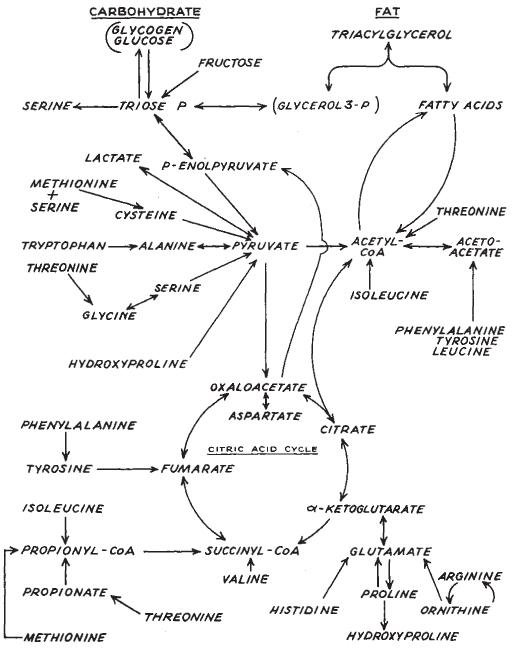
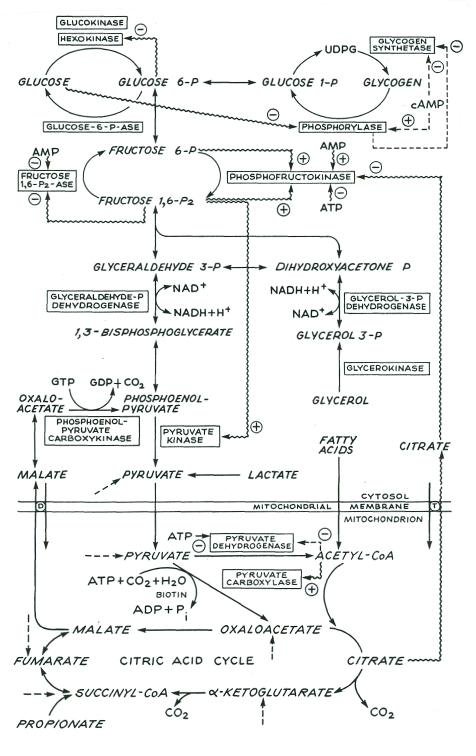
The diagram below depicts the basic inter-relationship between amino acids (protein), triglycerides (fat), and carbohydrates (sugars). Memorizing metabolic pathways, like the one below, is the best way to start seeing the overall “picture” up close.
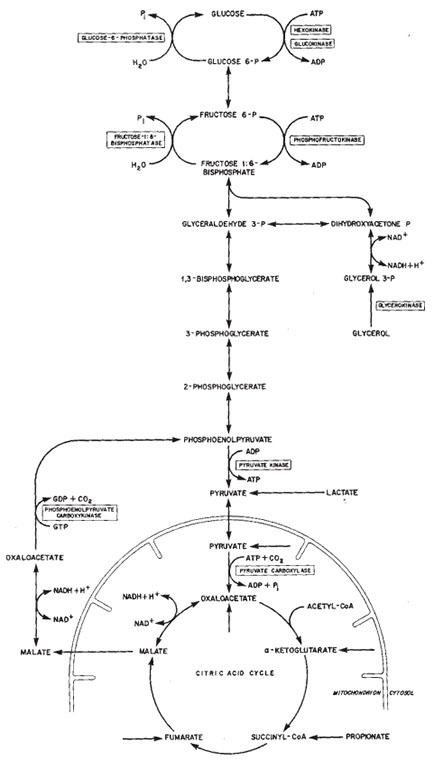
You will appreciate the next pathway, shown below, when you are unfed, on a caloric restricted diet, or when you are generating glucose from lactic acid (lactate) during bouts of anaerobic activity. Carbon flux to glucose from amino acids (derived from protein degradation) are not shown in this diagram. The following pathway, however, describes the metabolic events when your liver is told (“instructed”) to make glucose (sugar) via a process called gluconeogenesis. Start looking for “lactate” near the bottom of the diagram (just outside the mitochondrion) and then carefully follow the arrows to the top of the diagram to locate “glucose.” Note that the cytosolic enzyme “Pyruvate Kinase” catalyzes an irreversible (unidirectional) reaction between phosphoenol pyruvate (PEP) and pyruvate. Not much room here to discuss why it happens the way it does, but note that pyruvate must enter the mitochondrion to eventually get metabolized to phosphoenol pyruvate (PEP). In an unfed state, all reactions between phosphoenol pyruvate (PEP) and glucose in liver tissue are reversible. Do you see where the sugar “glucose” is produced and how we got there from “lactate?” The topic of gluconeogenesis gets very interesting when the regulatory (hormonal/enzymes) details are presented. Also look for pyruvic acid (pyruvate) and notice that pyruvate is just one step closer to glucose than lactate. Remember, lactate used for glucose production in liver (hepatic) tissue is generated in skeletal muscle tissue from anaerobic glycolysis, ie., “burning” or oxidizing glucose as a source of fuel when muscle cells are running a bit low on oxygen during intense physical activities. Although the steps are not shown or mentioned in the diagram below, certain amino acids generated from protein degradation can be used to make pyruvate and Citric Acid Cycle intermediates after they have been stripped (deaminated) of their nitrogen group. Simply, this means our bodies will increase rates of protein degradation in order to make glucose (gluconeogenesis) during periods of food restriction. Think simple. Does it make sense to try to keep the sugar (glucose) level from falling into the hypoglycemic (low) range during an intentional or unintentional restriction of food intake? Yes! The liver is pretty smart at times!
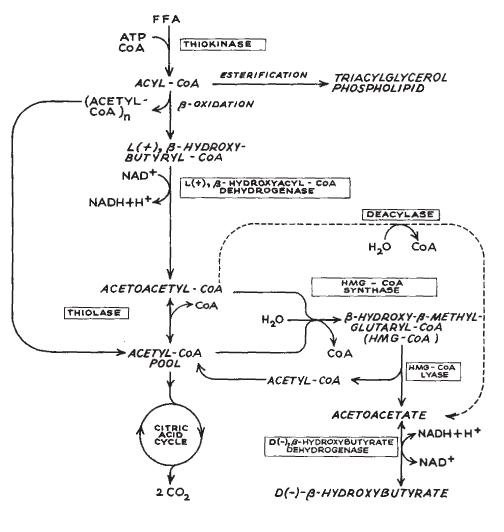
The next metabolic pathway, shown below, describes the production of ketone bodies (ketogenesis) from fatty acids. Look for “acetone.” It is the ketone body that gives you the “bad breath” syndrome when blood insulin levels are low. Seriously, it is critical that the liver makes ketone bodies whenever blood insulin levels are low. You have a healthy curiosity if you are wondering why?
The last diagram, shown below, pretty much explains why I took all the big words and complicated diagrams out of my Smart Weight Loss book. I have always found it fascinating that there are so many different ways to essentially make the same point.